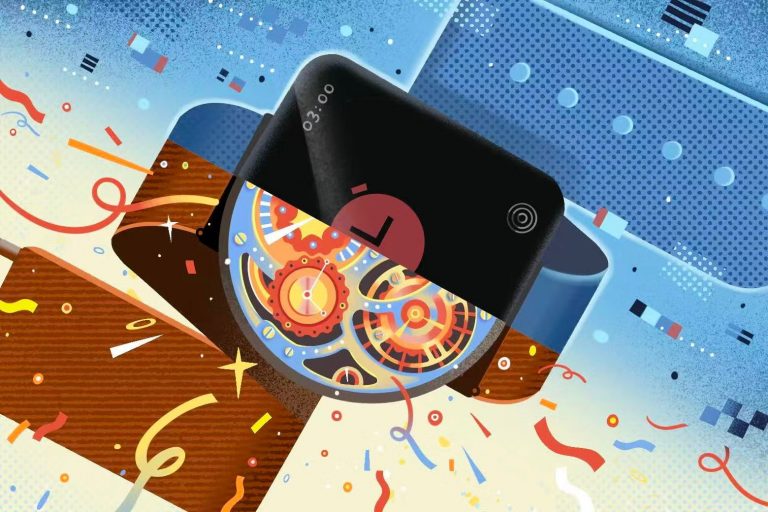
“The waiting game” published in monocle

Below is my short piece published in Monocle, “The Waiting Game.”

Since the invention of the atomic clock in 1949, time has been synchronised to the nanosecond across the globe. In the age of smartphones, access to your time is now at the behest of your employer, friends and the media. This shift has ushered in a new era of minutely regulated schedules and heightened expectations for timeliness, productivity and instant communication. Now our greatest fantasy is to eliminate waiting altogether. One glaring obstacle remains: the queue.

When we queue, it feels as though we are lending control of our time to another entity; waiting becomes an act of submission. Contrasted by the instant gratification offered by modern technologies, this submission feels like a waste of our most precious resource. Our schedules are crammed with plans and we react with hostility to anything that threatens them. The queue becomes the enemy and we either protest or unlock our phones to continue using our time in a manner that we believe is more productive.

It is easy to think that nothing is gained by waiting and sometimes that is true. But it is more than an obstruction in the way of our desires; it is a space that invites our imaginations to come alive. To wait is to charge the longed-for object with value. An eagerly anticipated letter from a lover is not the same as an instant message, even if the contents of the messages are identical. The food or drink made for you as you inch closer in a queue wouldn’t taste the same if it had just appeared before your eyes.

Think of waiting not as an obstacle but as an ingredient to cultivate. Tended to poorly, with bad queues or a lack of patience, it will sour everything. But observed well, it can make every moment of our lives taste sweeter.

Jason Farman is the author of ‘Delayed Response: The Art of Waiting from the Ancient to the Instant World’. This piece features in Monocle’s May issue, which is out this week, and is part of our series on the merits, business and even politics of queuing.

“How to Wait Well” – article published in aeon/Psyche Magazine

My article, “How to Wait Well,” was published in Aeon’s Psyche Magazine. The piece is excerpted from my book, Delayed Response: The Art of Waiting from the Ancient to the Instant World. Below is a portion of the piece; please visit this link to read the entire article.

Need to know

A story that’s well-known among architects and urban designers is the tale of how people stopped complaining about waiting for elevators in the skyscrapers of New York City. The story’s origins are in the post-Second World War building boom, with its massive increase of skyscrapers. One building’s manager brought in mechanical engineers and elevator companies to help him solve a daily problem: people were waiting too long for the elevators, and they were getting angry about it. After looking at the issue, the engineers and company representatives came back and said that this problem was unsolvable. But a psychologist who worked in the building came up with his own solution. According to one version of the story, the psychologist didn’t focus on elevator performance but on the fact that people felt frustrated with what was a relatively short wait. He concluded that the frustration was likely born out of boredom. With the approval of the building’s manager, he put up mirrors around the elevator waiting area so that people could look at themselves and others waiting. Thus, waiting became interesting. The complaints not only ceased immediately and completely, but some previous complainers actually applauded the building staff for improving the speed of the elevator service.

I continually return to this example as I survey our society at this moment in time, as we each feel the burden of wait times during a pandemic. Waiting has come to characterise much of life in 2020, from waiting for a vaccine to waiting for word from schools about what classes will look like for students, or waiting for jobs to return, or waiting for a Zoom host to start the meeting. As our lives have moved to remote connection, we wait as we’re put on hold for the next customer service representative to sort out our student loan bills, update our internet plans or guide us through the bureaucracy of unemployment benefits. We wait for ‘normal life’ to return, and have become living buffering icons with no sense of when the wait will cease.

We’re bored. We’re unproductive. We’re irritated by the wait and the way it makes us feel powerless, anxious, isolated and depressed. It’s no wonder that students across the United States are shirking campus restrictions and safety measures to be at bars and resume some semblance of a normal academic year, ultimately leading to large numbers of COVID-19 cases at many universities. We hate to wait, even for a relatively short amount of time. Similar to the elevator anecdote, there’s no feedback about when our waiting will end, so we’re left with all the complex emotions of that overused phrase, ‘uncertainty’. The uncertainty of how time will unfold in the coming months echoes the psychology research around the wait times for elevators (and other mundane moments of waiting, such as waiting for our Netflix movie to start playing or waiting in line at the grocery store).

But there is a way to reclaim waiting from the slow, thick doldrums of these negative encounters with delay. I believe we can wait better, but that requires a radical reorienting of our perspective on waiting. There are concrete actions we can take, which I detail below, including ways we can better handle our emotions and, instead, focus on our responses. In doing so, we can build a relationship with time that sees it as an investment in our social fabric. By investing our wait times in the social circumstances that people around us face, we can build radical empathy with the ways that others are forced to use their time.

what to do

Mindfulness, meditation and moments of stillness have helped many to centre their thoughts and emotions. These strategies are used for coping with the stress of intense working lives, the anxious reactions toward the upheaval that surrounds us and the accelerating pace of life in the digital age.

Waiting, however, is qualitatively different. While you can choose to pause, be still and meditate, you often can’t control whether you wait for something or not. That’s the rub with wait times: they’re often imposed rather than chosen. So we despise them because they put the power in the hands of others. Waiting precludes a sense of agency over using our time as we see fit. Wait times can even be used by others to remind us about their power, for example, in a relationship where we’re made to wait for them, an action that claims priority over time.

In order to find the benefits of waiting – rather than a knee-jerk reaction that wait times are a major barrier to living a good life – there are five practices you can employ:

1. Move beyond your feelings and toward the cause of waiting. Instead of festering in the emotional toll of waiting, it’s better to understand the larger context of wait times. Begin by asking why you’re waiting. The initial answers will likely be shallow responses to a complex situation.

A follow-up question that can help to move towards a complex answer is: ‘Who benefits from my waiting?’ While I might perceive waiting as imposed on me, and see it either as an inconvenience or as removing my ability to control my own time, it’s important to ask who (or what) profits from me waiting right now. Sometimes, we’re actually the beneficiaries of our own wait times. Waiting can be an investment that pays out to us: it can be a way for us to save or accrue money in a retirement account (rather than spending it when the first need arises) or it can be a way for us to delay gratification. I might wait now to get something better on the other side of my waiting. Or we might attribute an ability to wait to building patience, which is an esteemed character trait. And then there are the ways in which those around me might benefit from my waiting, such as when I wait at traffic lights so that other cars can move through the intersection.

Yet waiting can also reveal structural benefits such as when those in positions of power reiterate that power by making us wait. Delays in justice or equity are a way of keeping the disempowered from experiencing social change and mobility. Wait times can also reveal cracks in leadership, as people are forced to pause due to a lack of planning and strategic vision. Becoming students of waiting can give us insights into the larger causes for delay and the ramifications across different parts of our society. But these insights come only if we’re able to move past our irritation at being forced to wait.

2. Embrace the ways in which wait times are not in-between times. We tend to think of waiting as the limbo between what we were doing and what we hope happens next. We sit in a holding pattern until things are resolved. My personal practice is to identify what I hope will come on the other side of my waiting. What do I want the future to look like once my delays and wait times are resolved? I have learned so much about myself through this practice, about my dreams and ambitions, about my outlook for the future, and about my closest relationships and what I desire from them.

Such practices are not only a key to understanding ourselves better, they are fundamental for innovating on what exists and coming up with new futures. Waiting, as represented by silences, gaps and distance, allows us the capacity to imagine that which doesn’t yet exist and, ultimately, innovate into those new worlds as our knowledge expands.

Waiting pulls us into the present unlike any other experience of time. In the waiting, we realise that this moment is meaningful as it exists, not as some step toward a future moment. Waiting is present tense, and its meanings are full of the potential to transform the ways in which we see the world. Each moment is its own experience and its own fulfilment.

3. Decouple lack of productivity from being forced to wait. If wait times offer new visions of possible futures, then wait times can be productive. But this isn’t currently the dominant view. Instead, wait times are often seen as robbing us of productivity. When we’re productive and working well, time speeds by and we hardly notice it. When we wait, time is inescapably noticeable.

Yet, such a perspective has only led to a burned-out workforce that is overbooked and lacks creative vision. Wait times, instead, are necessary for us to find creative solutions to complex problems. Waiting, and the daydreaming and boredom that accompany it, unlocks the ‘default mode network’ of the brain. This is sometimes called the ‘imagination network’ and links us with creative approaches and solutions that we couldn’t have found if we sought them out; they only arrive when our thoughts are in a moment of pause. Building long-term solutions that innovate into new futures requires us to sit with knowledge, to have moments of boredom and waiting. Yet the current work environment offers none of that. If we build wait times into our workflow, not only could we be less stressed, we might actually be more productive and more creative.

4. Use wait times as an investment in the social fabric. When I began my research on waiting, I believed that everyone hated to wait just as much as I did. But, as I journeyed to countries around the world to study how various cultures respond to their wait times, I was struck instead by how differently people perceive waiting. Many of those I encountered not only have less anxiety around waiting than I do, several even basked in their wait times. One of my colleagues, who works in Uganda, told me about times when her neighbours would all gather an hour early at the bus stop just to wait as a community. The wait time was their shared language of investing time in each other.

Waiting also holds a specific social resonance for some cultures, reiterating priorities and values for each other’s wellbeing. The orderly, single-file lines for food and water rations in Japan after the 2011 Tōhoku earthquake stand in stark contrast to the viral footage of shoppers in Australia fighting each other for the last pack of toilet paper in March 2020.

Instead of seeing our time as individual – a scarce resource among other dwindling resources – we can see it as intertwined with the time of others. Here, a new moral imperative emerges. If my time is bound with yours, it benefits me to see you use your time well or, in contrast, to help you combat the social structures that force you to spend your time in ways that put you at a disadvantage. This is what the media studies scholar Sarah Sharma calls a ‘temporal awareness’ of the ways that all our time is intertwined but often uneven in how it’s imposed on different people. If we don’t foster this kind of awareness, she argues, we risk managing our own time in a way that ‘has the potential to further diminish the time of others’. Waiting can be what we study to see how things such as racial and class inequalities force people to live time in a different way, further emphasising their marginal positions.

This is particularly apt in this moment of pandemic. By waiting in quarantine for the infection curve to flatten, by waiting until it’s safe enough to go out to a music festival, by waiting until there is a vaccine or other measures before expecting life to return to normal, I am investing in the social fabric around me. I am investing in your safety by waiting. Yet, our long histories of linking wait times with powerlessness and a lack of productivity have often stemmed these efforts. Instead, we should redouble our investment in waiting, understanding it as a productive practice that invests in the value of the lives around us.

5. Get angry, as needed. Not all wait times are created equal. Waiting for a delayed flight is different from waiting for the results of a cancer screening. Waiting in line for a Disneyland ride bears no resemblance to waiting for justice for war crimes. Not all waiting is beneficial. Some waiting should anger us, especially as we build radical empathy with others who are forced to wait in ways that disempower them. This radical empathy gives us a deeper insight into the life of someone whose experience is vastly different from our own. We should be angry that it took so long for disaster relief to reach Puerto Rico after Hurricane Maria in 2017. We should be angry that we’re still waiting for justice for Black people killed in the US. As Martin Luther King Jr wrote in his ‘Letter from Birmingham Jail’ (1963):

For years now I have heard the word ‘Wait!’ … This ‘Wait’ has almost always meant ‘Never.’ We must come to see … that ‘justice too long delayed is justice denied’.

When my time is deeply entwined with your time, I should be angered at the uneven ways that it is distributed and when many of you are simply asked to wait. In these moments, we should collectively shout that we will wait no longer.

“Getting bored could be the most productive thing you do today” Published in management Today

Below is my article published in Management Today, “Getting bored could be the most productive thing you do today.

We try to eliminate waiting time, but these periods of forced idleness are the key to unlocking innovation, says professor Jason Farman.

by Jason Farman

For most of us, waiting time is wasted time. A moment of waiting could be used in innumerably more productive ways. As a result, we avoid waiting at all costs, from finding ways to board a plane quicker to using those small slivers of time between meetings to chip away at our inbox.

Yet our avoidance of waiting is robbing us of a valuable resource. Wait times are needed for innovation, for building knowledge and for imagining futures that don’t yet exist.

As we seek to eliminate waiting from our lives, we risk losing a moment in the day that has unique opportunities for how we imagine leadership and understand our most complex problems.

Cognitively, moments of waiting activate what is called the ‘default’ or imagination network of the brain, which enables us to make innovative connections across ideas.

By activating the imagination network of the brain, moments of waiting, boredom, and daydreaming afford leaders the ability to come across solutions that they could not have accessed if they had searched for them.

Similarly, if we do not give an idea time to percolate in our minds, we lose the ability to move it from short-term memory to long-term memory. In other words, waiting on an idea gives our brains the time it takes to build knowledge and, ultimately, innovate on that knowledge.

This is why I tell my university students never to cram for an exam; instead, the research recommends an approach that calls for bursts of activity followed by short breaks. The breaks are key for allowing an idea to move from short-term to working memory and ultimately solidifying as a long-term memory.

Applying this tactic for a team or group in a business might mean having them take a 15-mintue break after 45 minutes of activity. This imposed wait time, in which they must have down time that is device-free and boredom inducing, will not only activate the imagination network, it will also allow the ideas brought up to move into regions of the brain that build long-term thinking and innovation. As a result, teams can be more creative and build on knowledge rather than reinvent solutions from the past.

Cultivating wait times as an opportunity to ‘do nothing’ runs against every instinct a successful leader likely has. The pressures of success require them to be extraordinarily productive while having the pulse of the organisation, yet constantly striving for these might actually be counterproductive. Packing each second of the day in order to succeed will instead lead to burnout and an inability to solve problems creatively.

During the research for my book, I spent time with astrophysicists and operations managers at NASA and the Johns Hopkins Applied Physics Lab. The kind of research they conduct requires years of waiting as spacecraft journey across the solar system. For me, their research was conducted at a shockingly slow pace: a single project could take decades and might not lead to success.

Yet for these scientists and operations managers, long wait times functioned as an ‘enabling constraint’ that led to innovation time and time again. When confronted with a time where teams were forced to wait, these teams utilized those constraints as moments to imagine new ways of doing things. They created contingency lists for scenarios they had yet to encounter. They built new tools that would use the waiting as a device for measuring the universe. They imagined unexplored worlds and how they might study that which had yet to be seen.

Our models of success and our internal impulses urge us to avoid waiting at all costs. Wait times are the antithesis of productivity and successful people don’t let others waste their time. Yet a shift in perspective – one that values the moments when we are forced to wait – will lead to the kind of productivity that unlocks creativity, builds long-term knowledge, and avoids a workforce that is burned out.

“How Buffering Icons Shape our sense of time” published in Real life

Below is my article published in Real Life Magazine, “Fidget Spinners: How Buffering Icons Shape Our Sense of Time.”

We have an acute awareness of duration, and that awareness is always linked to prevailing technologies that shape how we understand and experience time. One such technology reshaping our sense of a moment is an otherwise unassuming little piece of interface design: the buffering icon — the circle spinning in place on our browsers as we wait patiently for our content to load. It suggests that some complex code is being processed behind the scenes, and in lieu of access to that code, we are given an animated indicator to hold our attention. The buffering icon’s activity is meant to help us sit back and enjoy our passivity. These icons try to shift our expectations, modifying our willingness to wait. But the image of a buffering symbol has come to trigger mainly anxiety. As the scope of our technology use has expanded with transmission capacity, bandwidth limitations have remained a choke point, and that means that some users are left waiting. But who waits, and how, differs depending on their status and their power.

Waiting isn’t essentially a wasted in-between time; waiting is a core part of messages we send each other across the fiber optic lines

Waiting, for most people, is associated with boredom and discomfort. We hate wasting time, especially when it is so limited, and we hate not knowing when we will get a response. As Neta Alexander has asked in her research on buffering icons, “Is buffering a punishment? And if it is, what sin have we committed?”

But as I argue in my book, Waiting for Word, we are looking at waiting entirely wrong. Waiting isn’t essentially a wasted in-between time; instead waiting is a core part of messages we send each other across the fiber optic lines. The time it takes to receive and interpret a message is also part of its content. We take the moment of waiting and give it meaning; it becomes a message of its own.

Part of our awareness of duration is cognitive. After a period of working with a particular device, according to this study by computer scientist Ben Shneiderman, our brains begin to set expectations for how quickly it should respond. If these expectations aren’t met we move on to the next task quickly (often around the two-second mark) unless something calls us back. But part of it is also cultural. We wait differently and we have different expectations that are grounded in our specific cultures. Thus, it’s a combination of technological expectations (how quickly we believe that our technologies should be working) and cultural expectations (how the contexts in a society set up certain expectations about how people should wait according to their position within that society).

When the Xerox Star, among the first commercial networked computers, was released in 1981, it allowed people to do things at a speed that they hadn’t been able to achieve before. “Yet, that was not part of peoples’ feelings or perceptions. They just felt like they were going really slow even though if you compared it with what you would have had to do without the Star, it was dramatically faster,” Brad A. Myers, professor of Computer Science at Carnegie Mellon, told me. People’s overwhelming feeling about this computer was that it took forever to load. It took forever to exchange files. It took forever to exchange messages. It took forever, even though it was faster than anything that had come before.

The Xerox Star used an hourglass cursor to indicate a processing lag. This cursor carried over to Apple’s Lisa computer in 1983. The next iteration was the wristwatch icon in 1984, designed by Susan Kare, who argued that “more people had experience with a wristwatch than an hourglass.” A year later, though, Microsoft Windows would go back to the hourglass. In the late 1980s, Unix machines had the “beach ball of death” that carried over into Apple’s HyperCard for Macintosh. The spinning rainbow beach ball of death launched with Mac OS X in mid-2001. Its official name is the “spinning wait cursor.” The first internet version of the loading icon was the Netscape Navigator “throbber,” launched in 1994. Around 2006, Microsoft Vista was released; it used a circular spinning blue icon, the ancestor of what we know as the online buffering icon.

Waiting icons make us willing to wait longer — three times as long as designs with no visualization to indicate something is happening behind the scenes. Even better are “percent-done progress bars” — an approach first popularized by Myers before he started his career in academia in the early 1980s — which promise a specific end in sight. Despite this, buffering icons remain prominent. When I asked Myers why this might be, he noted that conditions on the internet fluctuate extremely, and a progress bar that had been moving smoothly only to stall at 99 percent is more frustrating and dissatisfying than an opaque buffering icon.

Progress bars also may have little to do with actual data-transfer rates. Designers often manipulate the circle visualization that purports to track app-download progress, front-loading it so that it moves slowly at first but then speeds up at the end. This allows the download to please us by seeming to beat our expectations, which were established by the contrived slowness. Once again, technologies can establish a perception of time and duration that is independent of actual measurable seconds.


Because our experience of duration can be readily manipulated through technology and interface design, businesses have been exploring the possibilities. Some retailers are especially concerned with wait times online. An Amazon study showed that for every 100 milliseconds of delay on their site, they lose one percent of revenue. These sorts of findings have prompted them to build servers next to those of partner companies in “co-location facilities” to cut down on latency. The concern for reducing wait time applies to online video as well. According to this study, after five seconds of buffering, 20 percent of people who started to watch that video will leave; after 10 seconds, half will be gone. After 20 seconds, it’s up to 70 percent.

But there are other circumstances where we prefer to wait. In 2016, Facebook began offering security scans of user profiles, sending back details of any potential threats it could detect from users’ profile settings. Facebook could conduct these scans very rapidly and at first would spit back the information instantly to users. But when it did, people didn’t trust it. They didn’t believe the scan was thorough and often would not change their settings. But when Facebook inserted a bit of code that made the system pause, people began to trust the results more and make changes to their profile’s security settings. Travel sites also modify the speed of results, building in a false latency to try to make consumers feel the searches were more thorough. Technology is actually ahead of our expectations, yet our temporal expectations of thoroughness dictate how we experience it and the code that is written for it.

Designers often manipulate the circle visualization, allowing the download to please us by seeming to beat our expectations, which were established by contrived slowness

Similarly, the desire for waiting is built into launch events, as when Apple implements anticipation as a core feature of new products. Apple announces a product and makes us wait, building our desire. It knows it’s extraordinarily powerful to have the imagination at work during that wait time.

In A Lover’s Discourse, Roland Barthes describes the eroticism of waiting. He writes, “Waiting is an enchantment: I have received orders not to move … Am I in love? — Yes, since I am waiting. The other never waits. Sometimes I want to play the part of the one who doesn’t wait; I try to busy myself elsewhere, to arrive late; but I always lose at this game: Whatever I do, I find myself there, with nothing to do, punctual, even ahead of time. The lover’s fatal identity is precisely: I am the one who waits.” Lovers are not only willing to wait for the object of their desire, but are defined by that willingness to wait. While we wait, our desire grows and comes to define our relationship to the person (or object) we long for.

Sometimes the waiting is the very act that gives us pleasure in these erotic connections to people and things. Barthes goes on to recount a Chinese tale of a man in love with a courtesan, who tells him, “I shall be yours when you have spent 100 nights waiting for me.” On the 99th night, the man “stood up, put his stool under his arm, and went away.” Waiting was the practice of dwelling in the fantasy about the thing longed for.

Waiting is such a powerful part of our relationships (to people that we long for, to objects like iPhones that we may long for) because that’s where imagination does its work. For consumers and users of contemporary technology, waiting is deeply connected to our fantasies about who we are and what our purchases say about us. This was famously detailed by sociologist Colin Campbell in The Romantic Ethic and the Spirit of Modern Consumerism (1987). Campbell argued that modern consumers shape their identities by fantasizing about how a product will lead to the lifestyle they are daydreaming about, what he calls “autonomous, self-illusory hedonism.” For Barthes, the same is true of how we wait for the ones we are in love with and long for. When the thing longed for finally arrives, it can rarely live up to the excitement generated by our imaginations.

Though it is counterintuitive, a similar logic is at play in our online lives. For me, in my moments of boredom, as I turn to my phone and refresh my social media feed, I imagine that what’s on the other side of the buffering icon might be the content that will rid me of boredom and produce a satisfying social connection. The buffering icon here represents my hopes for the many ways that my social media feeds can satisfy my longings at any given moment. They rarely do, though I believe that we are half in love with the buffering icon here because it represents the promise of intimacy or excitement across the distances that separate us.

In moments of boredom, the buffering icon represents my hopes for the many ways that my social media feeds can satisfy my longings at any given moment

Though waiting is a powerful tool used by companies to create a bond with their products and a promise of fulfillment for the things we long for, users and customers want to feel that their waiting isn’t in vain. This is especially true when users are confronted with complex systems that aren’t visible, as with computer code being processed or data being sent across the lines. Feedback becomes an essential tool for letting users know that the system is working, making the invisible arenas of computing life seem less threatening and off-limits.

As the mechanics of our machines recede from view behind seamless devices, we can feel detached and disengaged. Our bodies feel less connected to a machine as its systems and infrastructures aren’t a visible part of our daily interactions with that machine. As discussed by the likes of Allucquére Roseanne Stone and Anthony Giddens, systems that recede from view ultimately require feedback for users. We will wait, but not if there’s little to no feedback about why we’re waiting (and nothing to give us a sense of control about how we wait). Buffering icons and wait cursors confront this challenge, giving us feedback that reshapes our everyday expectations and experiences of time and duration as computers process the data being sent across the lines.

But the visibility of waiting in digital interfaces should not make us think that the ultimate ideal would be to make waiting eventually disappear. We might embrace the visible tangibility of waiting not to remind us how much time we are losing but to demystify instantaneous culture and ever-accelerating paces of “real time.” Notions of instantaneous culture promise speeds of connection that will bridge the social distance between us, that will make our connection to ideas and knowledge instantly accessible, and that all of the desires we have can be fulfilled immediately. However, this logic that dominates the current approaches to the tech industry misses the power of waiting and the embedded role it plays in our daily lives. Waiting will never be eliminated and, deep down, we don’t want it to be.

If we embrace waiting as a core part of how we connect with one another, it could become a fruitful part of that connection. If much of our communication practices with each other use asynchronous media like text messages and social media posts, then our identities as social beings are indelibly linked to waiting (and the ways that waiting becomes a part of the interpretive process of receiving messages).

So the next time you see a “Read” receipt at the bottom of a text message, or see the three dots indicating that someone is typing back, embrace the waiting as a moment to notice how this time can tell you a lot about this particular relationship. Waiting reveals seams in our relationships and systems that we might otherwise have overlooked.

“The Forgotten Kaleidoscope Craze in Victorian England” published in atlas obscura

Below is my article published in Atlas Obscura, “The Forgotten Kaleidoscope Craze in Victorian England.”

It’s hard to imagine now, but in the years after the kaleidoscope was first invented in 1816, it distracted the public as much as an iPhone. A person couldn’t walk down a street in London without seeing people staring into these tubes and walking into walls from being so immersed in the new invention.

Its presence was pervasive. If a person didn’t own a kaleidoscope, they could pay a “penny for a peek” from London’s poor or homeless, who earned a living by offering passersby a look into the patterns produced by what some termed as one of the “most important inventions and discoveries of our time.”

Art from that period chronicled how immersive the kaleidoscope experience could be. Media scholar Erkki Huhtamo describes an engraving shown at the Frankfurt Film Museum, in which several people (and even a monkey!) are shown staring into their kaleidoscopes. As Huhtamo explains it, “These ‘kaleidoscomanics’ are so mesmerized by the visions they see inside the ‘picture tube’ that they do not even notice that other men are courting their companions behind their backs.”

The kaleidoscopes we can buy today, similar to the one I grew up with in the early-1980s, are not the same objects that came onto the scene in England. My first kaleidoscope was made of yellow cardboard with multicolored polka dots. It was cheaply made and squished under my fingertips as I turned the dial. In its base, it had plastic jewels that created patterns that would saturate when pointed directly at the sun. Within a month or two, the toy went into the toy box where it sat until being thrown away.

By contrast, the kaleidoscope of the early-and mid-1800s wasn’t just a child’s toy. In fact, it wouldn’t become child’s toy for at least several decades. Instead, this new mobile device was in the hands of everyone from children to the elderly; from professors to pastors and was seen on nearly every public street in the UK where it was first invented. How this beloved device went from adult obsession to throwaway juvenilia turns out to be a long, strange journey, one that has profound implications for the mobile devices you are carrying right now.

Sir David Brewster’s Invention

The kaleidoscopes on the streets of 19th century Britain were handheld and made from a range of materials, such as tubes made of brass with embellishments of wood or leather or those cheaply made of tin. The base of the tube was typically filled with broken pieces of glass, ribbons, or other small trinkets. When Sir David Brewster submitted his patent for the kaleidoscope in 1817, he focused almost exclusively on describing its inner workings, noting in passing that these elements could be “either covered up with paper or leather or placed in a cylindrical or any other tube.”

While the object of the 19th century itself might look familiar to us today, the ways the culture valued this object were very different.

Cigar box showing the portrait of David Brewster, with a kaleidoscope on the right

A portrait of Sir David Brewster, inventor of the kaleidoscope. (Photo: Public Domain/WikiCommons)

For scientists of the era, Sir David Brewster’s invention offered them a tool to understand how optics functioned. Two years before he invented the kaleidoscope, Brewster was conducting experiments on “the polarization of light by successive reflections between plates of glass.” For his work in this area, he was awarded the Copley Medal by the Royal Society of London.

And it was while experimenting with the relationship between optics, light, and mirrors that he began to notice that when the reflectors were inclined toward each other, they created circular patterns as the image multiplied across the surfaces.

As other scientists began working with the kaleidoscope, some found it useful as a tool to visualize massive numbers; the possible variations produced by a single kaleidoscope were unprecedented. As one writer noted, “Supposing the instrument to contain 20 small pieces of glass, etc. and that you make 10 changes in each minute, it will take the inconceivable space of 462,880,899,576 years and 860 days to go through the immense variety of changes it is capable of producing; amounting (according to our frail idea of the nature of things) to an eternity.”

In addition to scientific utility, the kaleidoscope also held aesthetic and industrial utility. The nearly-infinite varieties created by the kaleidoscope, which were produced symmetrically, were used for patterns on china, paper, carpets, floor-cloths, and other fabrics.

But it was the way that this new mobile device brought together these elements (the science of optics, industrial utility, and symmetrical beauty through a visual instrument) that captured the attention of the 19th century.

An 1819 issue of New Monthly Magazine, in listing the “most important inventions and discoveries of our times”—ranging from uses of combustible gas for illumination, uses of the newly discovered metal cadmium, advances in infrastructure and timekeeping, among others—ends its article by stating, “Lastly, no invention, perhaps, ever excited more general attention among all classes of people, than the kaleidoscope.”

What it Means to Look

A playwright and philosopher in Victorian America, R.S. Dement, recalled the moment he discovered what was inside a kaleidoscope as a child. Writing 61 years after the kaleidoscope had initially been brought to market in the UK, Dement said that he was originally fascinated by the reflections of colors bouncing around in various symmetries; but upon taking the kaleidoscope apart, he discovered nothing but “numerous pieces of colored glass, without symmetry, unsightly in themselves, have no connection with each other and but very trifling value.” He felt betrayed, “deceived into believing that what he saw was at least the shadow of something real and beautiful, when in truth it was only a delusion.”

Illustrations from Brewster's "A Treatise on the Kaleidoscopes, 1819"

Illustrations from Brewster’s A Treatise on the Kaleidoscopes, 1819. (Photo: Public Domain/Courtesy of HathiTrust)

By the time Dement had his childhood experience dismantling his kaleidoscope in the 1840s, it had already moved from being a cultural phenomenon on the streets to being a conversation piece in the Victorian parlor, likely sold with a stand attached. His reflections, however, match nearly word-for-word the description of the inside of a kaleidoscope written in a magazine article in an 1818 issue of Literary Panorama, right at the beginning of the kaleidoscope’s rise to popularity. The article states:

“He seizes the other end of the instrument, pours out the contents on the table, reduces the stars and ribbands to a few bits of coloured glass, declares that the mountains of gold and silver are nothing better than certain scraps of tissue paper, inscribed with magical characters; calls the most pleasing images mere spectra, visionary appearances, formed by reflection, refraction, and compound mystification of objects: in no other sense invaluable, than because they have no value—and this, sir, is the whole of the gentleman’s famous Kaleidoscope!”

Many people of the era argued that giving attention to the patterns built from such scraps was a waste of time. This was especially pronounced, they argued, when true beauty was all around. All a kaleidoscope viewer had to do was put down the instrument of false beauty and look up at real beauty in nature. Such admonitions could have easily been lifted directly from recent op-eds on our society’s use of cell phones.

A Kaleidoscope-esq wallpaper pattern from 1856

A Kaleidoscope-esq pattern for wallpaper, 1856. (Photo: Public Domain/WikiCommons)

Beauty and the Eye of the Beholder

There is a long history of controversial devices that created visuals through techniques that were critiqued as second-hand beauty rather than real, “authentic” beauty. In fact, we can trace these kinds of criticisms through every single medium that was used to create some kind of representation or visual work of art.

Visual media that challenge ideas of authentic beauty also bring up the question about what scholar Nicholas Mirzoeff calls “the right to look,” (from his book by the same name), that is, what are the cultural priorities of our visual attention. Where should our eyes be directed? In what kinds of things are we allowed be immersed (nature, a religious scripture, mediation, a lover’s gaze)? What can we look at and what can we ignore?

Devices for seeing had a particular position in 19th century Britain. At this time, optical objects like the kaleidoscope (alongside a host of other instruments like the telescope, the periscope, the microscope, and emerging “philosophical toys” designed for use by the broad public to better understand scientific principals around optics and light including the phenakistiscope and zoetrope) created certain ways of seeing the world that had been impossible until this point.

These new visual tricksters fed into the fascination in the deficits of the human eye and how it could be misled. As people began understanding human vision differently because of these objects, people also began seeing the world through machines like trains, moving walkways, and steamships.

In the early-19th century during the rise of the kaleidoscope, society in the UK began to feel in “despair” about the effects of these new inventions on our bodies and the kinds of attention we were paying to an increasingly sped-up world. An 1818 article writes:

“We are in Despair! [Not because of politics; that all will pass. We see] ourselves out done — thrown into the shade, the background, by a newly found out old invention, to see all the world, instead of studying the Telescope, the Microscope, or the Periscope—all the world intent on nothing but—the Kaleidoscope. Surely, this is too bad! Every boy in the street studies his Kaleidoscope, though he bumps his head against a wall.”

Walking around public streets with one eye dedicated to a tin tube (sold by “tinmen” as they were known), likely with the other eye closed, boys were bumping their heads on walls. Attention was being diverted toward a device that was creating illusions with mirrors.

This device thus represented the fleeting attention of a population who were easily bored, fascinated by illusions, and distracted from social interactions in the public sphere.

Pirated Kaleidoscopes

Sir David Brewster patented his invention in 1817, which would normally have guaranteed him exclusive rights to produce the kaleidoscope and the ability to make legal claims against those who infringed on his intellectual property. However, kaleidoscopes were being “pirated” everywhere and Brewster seemed to have little recourse to such piracy. His patent was not correctly laid out to restrict others from producing his invention and selling their own versions. He spent many years in legal proceedings trying to recoup the lost earnings from pirated kaleidoscopes.

In a letter to his wife in 1818, he wrote that, in his travels, he met with another manufacturer who agreed to make kaleidoscopes under his patent. This was a vitally important step because he only had one manufacturer at the time, Philip Carpenter, who owned an optical and scientific tools company. Carpenter could not keep up with demand: it was estimated by Brewster that over 200,000 were sold in the three months after it was launched.

“…no invention, perhaps, ever excited more general attention among all classes of people, than the kaleidoscope”, according to an 1819 issue of New Monthly Magazine. (Photo: Rudolf Ammann/flickr)

He went on to say in a separate interview that “out of this immense number there is, perhaps, not one thousand constructed upon scientific principles.” Furthermore, Brewster wrote, the general population didn’t understand its new device: “Of the millions who have witnessed its effects, there is perhaps not one hundred who have any idea of the principles upon which it is constructed, and of the mode in which those effects are produced.”

Millions had viewed it and millions more would come. As Brewster traveled around the UK trying to gain recompense for lost proceeds from his invention, he saw the knockoff kaleidoscopes everywhere. In another letter written in 1818 to his wife he wrote:

“I dine to-morrow with the Royal Society Club, and in the evening I undergo the ceremony of being admitted a member… I called yesterday at Sir Joseph Banks’, and met Sir Everard Home, and other wise men there. Both of these gentlemen assured me that had I managed my patent rightly, I would have made one hundred thousand pounds by it! This is the universal opinion, and therefore the mortification is very great. You can form no conception of the effect which the instrument excited in London; all that you have heard falls infinitely short of the reality. No book and no instrument in the memory of man ever produced such a singular effect. They are exhibited publicly on the streets for a penny, and I had the pleasure of paying this sum yesterday; these are about two feet long and a foot wide. Infants are seen carrying them in their hands, the coachmen on their boxes are busy using them, and thousands of poor people make their bread by making and selling them.”

His wife wrote back to echo the demand that was present in their hometown in Scotland:

“[T]he public are becoming impatient and clamorous now at the delay, and [the merchant] has orders to an amount that is prodigious…

People insist on leaving their money in advance in order to secure their chance, and from six in the morning till six at night his room is beset with people. They cannot understand how completely mismanaged it has been, and that the capital of Scotland, and your place of residence, should not contain a single kaleidoscope for sale for the last eight days!”

This mania lasted for decades. But by the Victorian era during the middle and last half of the 19th century, there wasn’t a single kaleidoscope seen on the streets of London. By this time, they had all gone indoors, propped up on stands in parlors, novelties in the home. The kaleidoscope did not simply lose fashion and thus get taken up by children; instead, there was a transition point that had its seeds sown as soon as the “mania” around kaleidoscopes emerged.

From the Streets to the Parlor

Public space in early 19th century Britain was a sphere that was carved out by very particular practices, by things that were appropriate or inappropriate to do in these kinds of spaces. This was typically understood as cleanly separate from the “domestic sphere” of the home, where the expectations over what was appropriate were very different.

Many of these expectations were produced out of the ways that commerce and gender norms intersected; the public space was a sphere for business, ideas, and the flow of public life (all marked with a distinctly male connotation) while the domestic sphere of the home was a private space for family and the foundation of personal affairs (associated as female in connotation).

While in our own experiences of these spheres in the 21st century are replete with examples of how these spaces bleed over into one another in ways that make them nearly indistinguishable (such as someone having an intimate phone conversation on his or her mobile device on a train within earshot of the entire train car), these spaces were understood as very distinct when the kaleidoscope was first born.

When the kaleidoscope did emerge, it did so out in public rather than in the home. One possible reason for this is the physical nature of the instrument: it required light to function adequately, and thus people took it outdoors into the sun to get the best effect.

Additionally, there was also significant social value in taking the kaleidoscope out into the public sphere. It served as a status symbol of someone who owned the latest device that everyone was talking about. Others around the kaleidoscope owner would be interested in the instrument even if they themselves owned kaleidoscopes since no two were identical: each varied in some way due to the different elements included at the base of the tube.

Since it was portable, easy to carry with you (i.e., a mobile technology), people took it everywhere and situated themselves in the midst of the social conversations happening about “Dr. Brewster’s latest invention.”

Yet, the kaleidoscope required that the attention of its user focus on the patterns in the tube rather than the everyday life happening around the tube. It was a medium that pulled the users attention elsewhere, away from the public life on the street. There were many publications, especially in religious magazines of the era, which admonished people to put away their kaleidoscopes; to stop being satisfied with false beauty when real beauty was all around.

These articles, poems, and short stories noted that the kaleidoscope not only pulled a person away from the natural beauty of God’s creation (and thereby pulling a kaleidoscope viewer away from potential communion with God), but it also encouraged the kind of viewing that was never satisfied with what was presented.

Another popular 19th century optical device, a Phenakistoscope, in action

Another popular 19th century optical device, a Phenakistoscope, in action. (Photo: JBarta/WikiCommons CC BY-SA 2.5)

The kaleidoscope thrived because of its ability to provide variance; people wanted to see what pattern would come next. Not only were these kaleidoscope viewers focused on the wrong kind of beauty, they were doing so in a way that created a mind ever eager for the next beautiful pattern.

Within a couple of decades, near the beginning of the Victorian era, there were no “penny for a peek” signs to be seen on city streets and the kaleidoscope was now sold with a stand, meant to be placed on a table in the Victorian parlor. It was a conversation piece in the home. It was less mobile than it was portable within the owner’s house. Essentially, the kaleidoscope had been “domesticated.”

By the 1870s, when Charles Bush first introduced his widely-popular kaleidoscopes in the United States, it had a crucial difference from the first kaleidoscopes—it was attached to a stand. It was no longer mobile in the ways it was in the days of “kaleidoscomania”. By World War II, the kaleidoscope was securely in the realm of children—no longer existing as a centerpiece for adult conversation—and once again was sold without a stand. Instead, they were made of cheap materials and sold among erector sets and Kewpie dolls.

An early model kaleidoscope on a stand

A kaleidoscope on a stand, for use in the home. (Photo: Karl Gruber/WikiCommons CC BY-SA 4.0)

The first step of this domestication of a technology that threatened the use of public space is that it was diminished: detractors from very early on called it a toy. While it is obvious that the kaleidoscope was much more than a “mere toy” for early 19th century Britain, articles and editorial pieces that disparaged the kaleidoscope almost always refer to it as a “mere toy” or a “child’s plaything”

Of course, a glance around the streets of London would tell you otherwise. But its movement indoors had begun.

Domesticated Technologies

When a new medium first emerges, a few specialized users typically take it up at the beginning. These are either those who are insiders into this realm of technology (such as the handful of professors and scientists who used early versions of the internet after it was first created as a collaboration between the Department of Defense and several universities in the U.S.) or by the wealthy (as seen in the early purchasing of car phones long before the ubiquitous handheld versions became a part of our everyday lives).

In terms of everyday life, this early stage is characterized by “the shock of the new,” often accompanied by questions such as, “Why would I ever need a [insert name or function of new technology here]?” As early adoption moves to mass adoption, when a new medium becomes widely used by a larger portion of a population, the technology moves from being a shock to existing in the realm of the mundane.

(Photo: Joho345/WikiCommons CC BY 4.0)

So, on one hand, the journey of all technologies is from early adoption to mass adoption to domestication. Here, by domestication, the taming of a technology is its profound incorporation into our everyday lives so much that we don’t even notice it any longer. It is mundane.

The kaleidoscope took a similar journey; however, what sets the kaleidoscope apart is that, as a “mobile device” used in public spaces— challenging how those spaces got used—its domestication radically changed the very nature of the technology.  It’s worth noting, though, that we might be seeing a reversal of movement from outside to inside with mobile phones. After all, the first telephones and computers were tethered to walls and desks. They were items whose only use was in the home or office. Now, freed from the domestic sphere, they roam everywhere.

Each time a new mobile technology is introduced to a culture, it redefines our understanding of what it means to be a social person in the world. Devices like the kaleidoscope and our iPhones are symbols of this shift. Right now, there is a lot of investment in getting us to put down our devices and experience “authentic” human connection. 

This past weekend, the New York Times mailed out a million or so Google Cardboard viewers in the largest distribution of virtual reality technology to date. How even more intrusive devices like Google Cardboard or the Occulus Rift will be received by a mainstream audience remains to be seen. But it’s not just the lessons of the kaleidoscope age that linger—it’s the technology itself. Google Cardboard, a neat mostly-paper viewer into which the audience slides a smartphone, is a repackaged version of the Victorian stereoscope. Two lenses create the illusion of three-dimensional viewing. Penny for a peek, indeed. 

“The Myth of the Disconnected Life” published in The Atlantic

Below is an excerpt of my article published in The Atlantic, “The Myth of the Disconnected Life.”

The new year is now well underway and many people have probably already broken the resolutions they made to disconnect from their digital devices more often and reconnect with the people and places immediately around them.

In reflecting on the year that has passed, there were moments that became highly symbolic of the need to disconnect. For example, we began 2011 with a YouTube video that went viral on January 14: security footage of a woman falling into a fountain at a Philadelphia mall because she was walking while texting. The year ended with another plea to disconnect from our devices: the National Transportation Safety Board called for a ban on all cellphone usage while driving.

commercial that aired throughout 2011 for the Windows phone resonated with these concerns around when it is or isn’t appropriate to use our phones. It shows people ignoring their children by staring at their phones; a woman getting married walks down the aisle while texting; joggers staring at their phones run into each other; people fall down stairs or sit in seats already occupied by someone else. All this mayhem is caused because people cannot look away from their phones. The commercial’s tagline is an appeal to these cellphone users: “Be Here Now.”

The call to disconnect was found in several best sellers of 2011 from Sherry Turkle’s Alone Together to William Powers’ Hamlet’s Blackberry. Powers has since become emblematic of a movement called the “Digital Sabbath.” Each Friday night, he and his family disconnect their computers from the internet for the weekend as a means to curb an ever-growing sense of information overload.

For Powers, who began these Digital Sabbaths while writing his book, the sense of “digital busyness” that comes with information overload typically leads to a lack of depth in the ways that we think and connect with each other.

When his family announced that they would be sacrificing internet connectivity for 48 hours every week, they received some angry responses from colleagues who were upset that they would be unreachable by email. However, for Powers, the cost of disconnecting was rewarded with deeper and more meaningful connections with his family.

Since the publication of Hamlet’s Blackberry, many people have followed suit and dedicated time during the week in which they turn off, unplug and walk away from their mobile phones, email and Facebook accounts.

For advocates of the Digital Sabbath, the cellphone is the perfect symbol of the always-on lifestyle that leads to disconnection and distraction. It epitomizes the information overload that accompanies being tethered to digital media. Advocates of Digital Sabbaths note that if you are nose-deep in your smartphone, you are not connecting with the people and places around you in a meaningful way.

Ultimately, the Digital Sabbath is a way to fix lifestyles that have prioritized disconnection and distraction and seeks to replace these skewed priorities with sustained attention on the tangible relationships with those around us.

Yet, these are familiar arguments that have taken one form or another throughout the history of media. Plato argued that writing would disconnect us from the meaningful presence that comes with face-to-face interactions. The spreading of ideas across geographic distances – far beyond the body of the author – limited our ability to engage in meaningful dialogue and produce true knowledge.

Since Plato’s diatribe against writing, few emerging media and technologies have been immune from the critique that they disconnect us from the people and places in our lives.

Digital media scholar, Erkki Huhtamo, offers one particularly apt example: at the turn of the 19th century in England, some people had become so immersed in their kaleidoscopes that they were completely disconnected from the world around them. The result can be seen in an early engraving depicting the “kaleidoscomania.” The people are so “mesmerized by the visions they see inside the ‘picture tube’ that they do not even notice that other men are courting their companions behind their backs.”

themania_615.jpg

In the century that followed, the bicycle fell under a similar critique. Churches condemned this new technological mode of transportation for disconnecting people from their local community and distracting them with the dangers of the outside world: the promiscuity promoted in places like the cinema and roadhouses. Soon thereafter, the automobile also received criticism about creating social distance and an acceleration of culture (quite literally).

Around the same time, in 1926, the Knights of Columbus Adult Education Committee set out to investigate another emerging technology: the telephone. Their meetings were dominated by questions such as, “Does the telephone make men more active or more lazy?” and “Does the telephone break up home life and the old practice of visiting friends?”

While historical comparisons are important to contextualize our culture’s reaction to emerging technologies, there is something unique about our digital devices, especially the ones we have on us at all times like our smartphones. These technologies seem to offer a more compelling example for those who want us to disconnect from technology. As Sherry Turkle argues in her book Alone Together, connection to our devices assumes that we’re disconnected from something, someone or somewhere else. This “always-on/always-on-us” screen, as Turkle terms it, is a space that pulls us elsewhere.

However, using “disconnection” as a reason to disconnect thoroughly simplifies the complex ways we use our devices while simultaneously fetishizing certain ways of gaining depth. Though the proponents of the Digital Sabbath put forth important ideas about taking breaks from the things that often consume our attention, the reasons they offer typically miss some very significant ways in which our mobile devices are actually fostering a deeper sense of connection to people and places.

Take, for example, the mobile storytelling projects that have emerged over the last few years. These projects seek to get us to engage with the multiple histories of a place by accessing them on our mobile devices and contributing our own stories of what that place means to us. As the designers of one project, [murmur], note, “The smallest, greyest or most nondescript building can be transformed by the stories that live in it. Once heard, these stories can change the way people think about that place and the city at large.”

[murmur] began in Toronto and is now implemented in 12 cities worldwide. [murmur] places large green, ear-shaped signs with a phone number and location code on lampposts and street signs throughout the city. When callers dial the location number, they can listen to recorded stories and histories about the place at which they are standing. [murmur] also encourages the callers to record their own histories about the site.

murmur_615.jpg

Promoting this kind of deeper context about a place and its community is something these mobile devices are quite good at offering. A person can live in a location for his or her whole life and never be able to know the full history or context of that place; collecting and distributing that knowledge – no matter how banal – is a way to extend our understanding of a place and a gain a deeper connection to its meanings.

Meaning is, after all, found in the practice of a place, in the everyday ways we interact with it and describe it. Currently, that lived practice takes place both in the physical and digital worlds, often through the interface of the smartphone screen.

A recent smartphone app, Broadcastr, is doing something similar by curating audio narratives about a place and letting users listen in and record stories about the location at which they are standing. In the coming months, Broadcastr will allow users to attach a variety of media to their location on the map, including photos and videos that can be organized into a walking tour of an area.

A related app by the Museum of London was recently launched that makes their collection of London-based paintings and photographs available, allowing users to overlay their physical location with an historical image. For instance, someone can stand on Queen Victoria Street, hold up their iPhone and see an image of the Salvation Army Headquarters crumbling to the ground after a bombing during WWII overlaid on top of the realtime perspective caught by the phone’s camera.

museum-of-london_615.jpg

Even apps like Yelp and Foursquare offer a deeper context to a place than might be obvious. By offering user-created reviews and tips about a place, the idea of local knowledge is extended and offered broadly to those with an internet-capable mobile device.

While none of these practices may seem unique to our digital age – stories have been attached to place throughout history – the ability to connect innumerable narratives to a single site is something that other media haven’t been able to effectively accomplish.

Beyond developing a deeper connection with places, using cellphones to foster deep connection with the people in our lives is a common, everyday practice. While it may come as a surprise to some, this is epitomized in the ways that teens are currently using their cellphones. Mobile media scholar Rich Ling’s studies of teen cellphone use found that as texting increased among teens, internal group cohesion also increased. Though realtime voice conversations have dropped dramatically – a shift cemented in 2009 when, for the first time, cellphones were used more for data transfer than for voice communication – the significant increase in texting among teens has led to a stronger bond among small groups of peers.

Advocates of the Digital Sabbath have the opportunity to put forth an important message about practices that can transform the pace of everyday life, practices that can offer new perspectives on things taken for granted as well as offering people insights on the social norms that are often disrupted by the intrusion of mobile devices. We absolutely need breaks and distance from our routines to gain a new points of view and hopefully understand why it might come as a shock to your partner when you answer a work call at the dinner table. Yet, by conflating mobile media with a lack of meaningful connection and a distracted mind, they do a disservice to the wide range of ways we use our devices, many of which develop deep and meaningful relationships to the spaces we move through and the people we connect with.

Published Works

Book Manuscript

Books Edited

Books: Contributing Author

  • Applied Media Studies: Theory and Practice. Ed. Kirsten Ostherr. Co-authors: Tara McPherson, Anne Balsamo, Lisa Parks, Heidi Rae Cooley, Elizabeth Losh, Lindsay Graham, Daniel Grinberg, Lindsay Palmer, Bo Reimer, and Patrick Vonderau. New York: Routledge Press, 2017.

Journal Articles

Book Chapters

Conference Proceedings:

Encyclopedia Entries:

Book Reviews


C.V.

[pdf-embedder url=”http://jasonfarman.com/wp-content/uploads/2018/08/Farman_CV_May-2019.pdf” title=”Farman_CV_May 2019″]

Courses

Spring 2019

  • MITH 610/AmSt 629U: Introduction to Digital Studies (Graduate course)

Fall 2018

Spring 2016

Fall 2015

Spring 2015

Summer 2014

Spring 2014

Fall 2013

Summer 2013

Spring 2013

Fall 2012

Spring 2012

Fall 2011

Fall 2010

Summer 2010

Spring 2010

Fall 2009

Spring 2009

Fall 2008

Summer 2008/2009

Spring 2008

Fall 2007

Creative Portfolio

Below you will find some of my creative projects. To see my publications related to this work, please go to my Publications page. Examples of student work are listed here as well along with the prompts for each assignment.

[visual_portfolio id=”927″ class=””]

Invisible and Instantaneous Article Published in Media Theory

My journal article, “Invisible and Instantaneous: Geographies of Media Infrastructure from Pneumatic Tubes to Fiber Optics” — drawn from research I conducted for my book — was just published in the journal Media Theory. Below is an excerpt. Please see the full text HERE.

[stag_dropcap font_size=”50px” style=”normal”]A[/stag_dropcap]t the height of the dot-com boom in the late-1990s, technology entrepreneur Randolph Stark was walking home through his Wall Street neighborhood and saw crews digging up the street to lay fiber optic cables between the banks and the stock exchange. Stark was walking home from a tech meet-up in Manhattan. Earlier that evening, a colleague had mentioned to him that New York used to have miles of pneumatic tube lines that shot up to 20,000 letters a minute between Post Offices. On the walk home from the meet-up, as Stark was looking at the heavy machinery digging up the concrete and asphalt, it all seemed like an unnecessary amount of labor and cost – at about $1000 a foot – when the infrastructures were already there just a few feet beneath the hole that was being dug anew (Figure 1). He then envisioned a new business venture: running fiber optic cables in the old pneumatic tubes that were laid in the 1890s. This would allow companies, apartments, and office buildings to get faster Internet connections since the data would have less distance to travel.

[aesop_image img=”http://jasonfarman.com/wp-content/uploads/2018/09/Farman-02.jpg” align=”center” lightbox=”on” caption=”Figure 1: The ganglia of pneumatic tubes beneath the streets in New York City at the intersection of 17th Street and Sixth Avenue, 1906. Image courtesy of the National Archives, Washington, D.C.” captionposition=”center” revealfx=”off” overlay_revealfx=”off”]

There are significant parallels between the fiber optic age of the Internet and the era of the pneumatic tube mail system. Like our own moment, the age of pneumatic tubes created ways for people to send messages at unprecedented speeds. Starting in 1897, 27 miles of tube were laid underneath the streets of New York City in order to use compressed air to shoot canisters of mail around the city between post offices. The pneumatic tube mail system, which pushed brass canisters that could hold 600 letters each, were popular in Europe prior to their launch in the United States. But starting in the late-nineteenth century, pneumatic tube systems would be an important part of mail delivery in Philadelphia (the first city in the United States to start using pneumatic tubes), New York, Boston, St. Louis, and Chicago. The canisters, or “carriers” as they were called, would leave the Post Office every 10 minutes and would fly underneath the city streets, able to deliver a message from Times Square to the General Post office in three minutes even in a deep snowstorm. With these tubes running underground and connecting people in new and technologically advanced ways, the era felt as if the possibility of instant connection was now at hand. Noticing the parallels between the pneumatic era and the fiber optic one, Stark asked himself, “Why don’t we have pneumatic tubes running to every house? Why did that never happen?”

There are moments in history when technologies allowed us to connect with each other at unprecedented speeds. These moments gave people the ability to send messages at rates that seemed to eliminate waiting altogether. The rise of the pneumatic tube mail system was one such moment. Cities across the country were clamoring to install pneumatic tube mail systems. Sending mail in canisters pushed by compressed air under the streets of a city was seen as the essence of being cosmopolitan and modern. Pneumatic tube systems were not simply an efficient way to deliver mail and packages across cities with congested streets now packed with automobiles; instead, they were symbols of modern life. Pneumatic tubes represented a technological leap forward allowing us to connect instantly.

The geographic placement of the tubes, underground and out of sight in urban centers, helped fuel a cultural imaginary around the idea of “instant messaging.” The pneumatic tube geographies were central to their success and shaped the way that the medium was not only used from day to day, but also how the public imagined the role of this new medium in their identities at the turn of the twentieth century. The underground placement of the pneumatic tubes served two purposes. First, it was practical, allowing the message canisters to be sent throughout the city without interrupting life above the surface. The ability to send messages without dealing with the crowded city streets or severe weather was one of the main selling points of the pneumatic tube system. It could deliver consistent speeds regardless of how congested or impassable the streets got above. Second, by being out of view, it allowed the imagination to create a mysticism around the system that could be totally disconnected from the physical reality of the pneumatic tubes. For example, in a newspaper cartoon from 1915 that advocated for extending the system, it shows a clunky mail car stuck at a bridge crossing while a missile-shaped canister filled with mail shoots through a tube under the river. The cartoon contrasts these by saying “What We Have” next to the mail car, and “What We Ought to Have” next to the mail-missile (Figure 2).

[aesop_image img=”http://jasonfarman.com/wp-content/uploads/2018/09/Farman-03.jpg” align=”center” lightbox=”on” caption=”Figure 2: A drawing published in the Bronx Home News published on December 5, 1915 comparing the clunky automobile and its limitations with the futuristic (and militaristic) missile of the pneumatic tube canister being shot under the Harlem River. Sending mail in canisters pushed by compressed air under the streets of a city was seen as the essence of being cosmopolitan and modern. Image courtesy of the National Archives, Washington, D.C.” captionposition=”center” revealfx=”off” overlay_revealfx=”off”]

In this article, I explore the ways that “instant connection” through a messaging technology had a powerful cultural allure, regardless of whether or not the systems could actually connect people instantly. Instantaneous communication is still an enormously powerful concept in our own culture. It is the motivator behind that feeling that we are unable to leave the house without our phone for fear that we’ll be out of touch. Being able to reach out and connect instantly, without the need to wait, is a dominant touchstone for our era. The seeds of this enchantment of the instant were planted back in the mid- to late-nineteenth century with the launch of the telegraph and the pneumatic tube systems. Yet, this notion of instantaneous communication is a mythology that drives consumer attitudes more than it delivers a wait-free mode of communication. That is to say, the ways that this enchantment changes how we think are more powerful than the technological abilities of the system itself, whether that be text messages on a mobile phone or pneumatic tubes shooting messages around a city.

Student Projects

Graphic Design: Posters (Prompt HERE)

[envira-gallery id=”960″]

WMATA Metro SmarTrip Kiosk Redesign (Prompt HERE)

[pdf-embedder url=”http://jasonfarman.com/wp-content/uploads/2013/01/metro-interaction-screens.pdf”] [pdf-embedder url=”http://jasonfarman.com/wp-content/uploads/2013/01/metro-welcome-screens.pdf”]

“The Things We Carry” Photography Project (Prompt HERE)

[envira-gallery id="976"]

Surveillance Maps of UMD Campus

[pdf-embedder url=”http://jasonfarman.com/wp-content/uploads/2020/01/surveillance-camera-map.pdf” title=”surveillance camera map”]

Cellphone Films (Prompt HERE)


Cultural Design Intervention Pitches (Prompt HERE)

[pdf-embedder url=”http://jasonfarman.com/wp-content/uploads/2013/01/cultural-design-pitch-Gender-and-Clothing-campaign.pdf” title=”cultural design pitch-Gender and Clothing campaign”]

[pdf-embedder url=”http://jasonfarman.com/wp-content/uploads/2013/01/Cultural-Design-Intervention-Education.pdf” title=”Cultural Design Intervention-Education”]

[pdf-embedder url=”http://jasonfarman.com/wp-content/uploads/2013/01/Cultural-Design-Intervention-Environment.pdf” title=”Cultural Design Intervention – Environment”]

Mobile Repair Project Video

Community Documentaries: How Does Your Community Interface with Digital Technology? 

Please visit: https://www.youtube.com/user/communitydocumentary